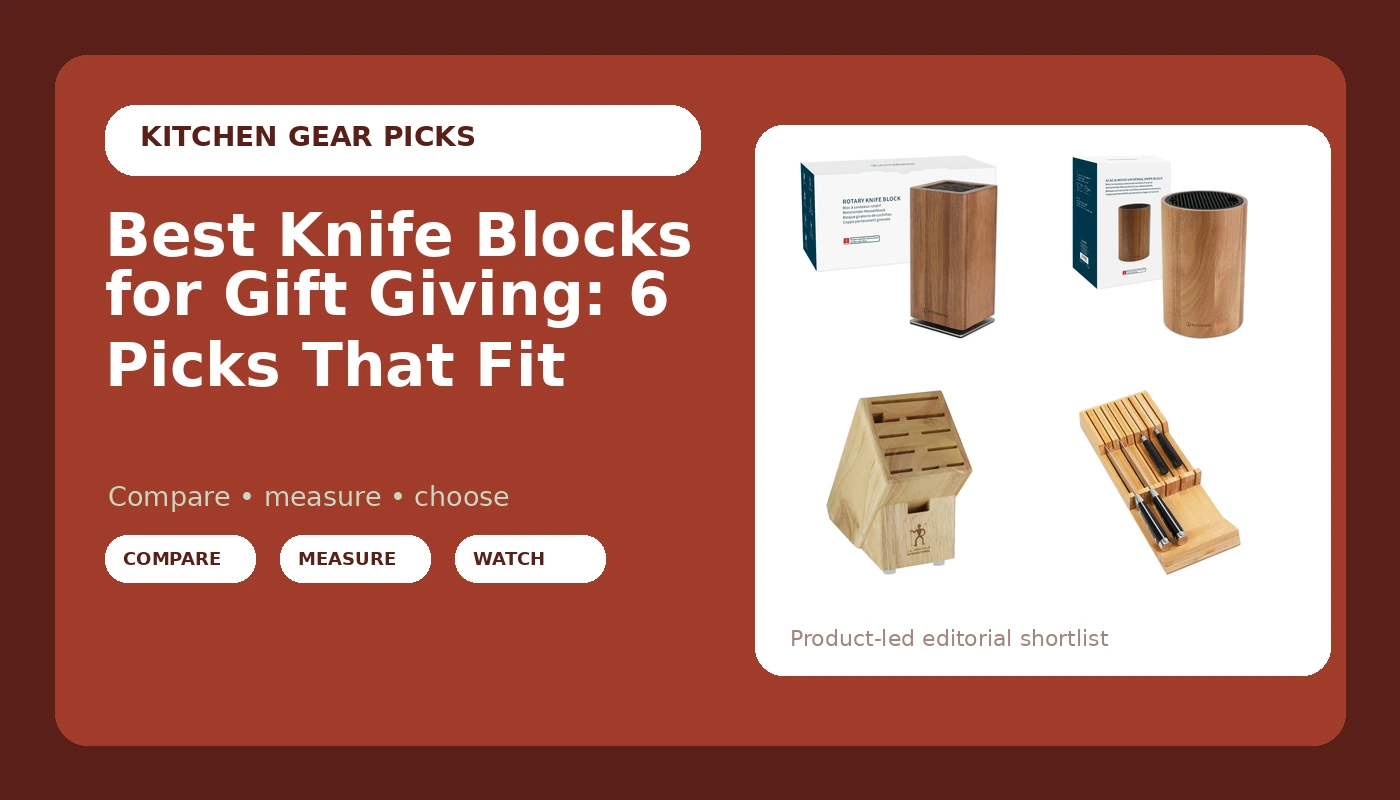
Buying the best knife blocks for gift giving is harder than it looks, because a block is storage shaped around someone else's knives. Slots sized for one maker's set swallow a thin paring knife and refuse a wide chef's blade; a tall counter block can foul the cabinet above it; a drawer insert can be an inch too deep for the drawer it was meant to organize. None of that shows up in a product photo, and the recipient is unlikely to mention it. They will smile, set it on the counter, and go back to the knife roll in the pantry.
This guide covers both halves of the category, the countertop block and the in-drawer insert, because the right choice depends on the kitchen the gift is going into. It sticks to what the product records actually say: what each block holds, what it is made of, where it lives, and what the buyer has to measure before ordering.
Quick answer
The KITCHENDAO Magnetic Knife Block without Knives is the strongest fit for gifting into a kitchen you do not cook in every day because it holds blades with magnets rather than fixed slots, so it does not assume the recipient owns any particular knife set. Choose the KITCHENDAO Universal Knife Block Without Knives instead when the recipient keeps kitchen scissors and a honing rod on the counter and wants a dedicated place for each.
What matters in knife blocks for gift giving
Slot count is the first number shoppers check and the least useful one on its own. An 11-slot block and a 14-slot block can hold the same six knives if the openings are shaped differently. What matters is whether the slots suit the blade lengths the recipient actually owns, whether there is room for a honing rod and kitchen scissors, and whether edges rest on their sides rather than dropping straight down onto a divider. Drop-in vertical storage is the pattern most likely to dull an edge over time, because the blade meets wood on every trip home.
The two countertop designs here take opposite approaches. The magnetic model holds blades flat against a rotating acacia face, which means no slot widths at all and a place for utensils as well as knives. The round universal model gives each item its own opening, including the scissors and the sharpening rod.
Counter space is the real budget. A counter block occupies the same strip of counter every day for years, so it has to earn the footprint, and it has to clear the underside of the upper cabinets. Drawer inserts give that counter back and hide the blades below the counter line, which is often the better gift in a small kitchen and almost always the better one in a house with young children.
Material matters for durability and for cleaning. Acacia and maple are dense enough to hold a divider and to be refinished when the finish wears; bamboo is light and stable, which suits an insert that gets lifted out; plastic never needs oiling but shows scratches. None of it changes how a knife cuts, but a block that swells, cracks, or traps crumbs does get thrown out.
The knife blocks safety questions that come up most with a gift are about exposed edges and tipping. An open magnetic block leaves blades visible and within reach of a child; a closed slot block hides them but can tip if it is tall and light. Drawer inserts keep everything below the counter, but only if the drawer closes without pinching a handle.
Be clear about one thing before the shortlist: every product here is the block or insert alone. Knives are not included in any of them, so the gift is storage for a set the recipient already owns. That is usually the right gift anyway, since handle material and blade length are personal.
A knife block warranty is usually short and rarely worth shopping by. The problems that actually show up are shipping damage on a wood corner and trim tabs that snap during fitting, and both are return issues rather than warranty claims.
Read knife blocks for gift giving reviews for fit complaints rather than for star averages: a block that will not clear the upper cabinet, an insert that does not match the drawer depth, or slots too narrow for a wide chef's blade.
Knife blocks worth comparing
Top pick
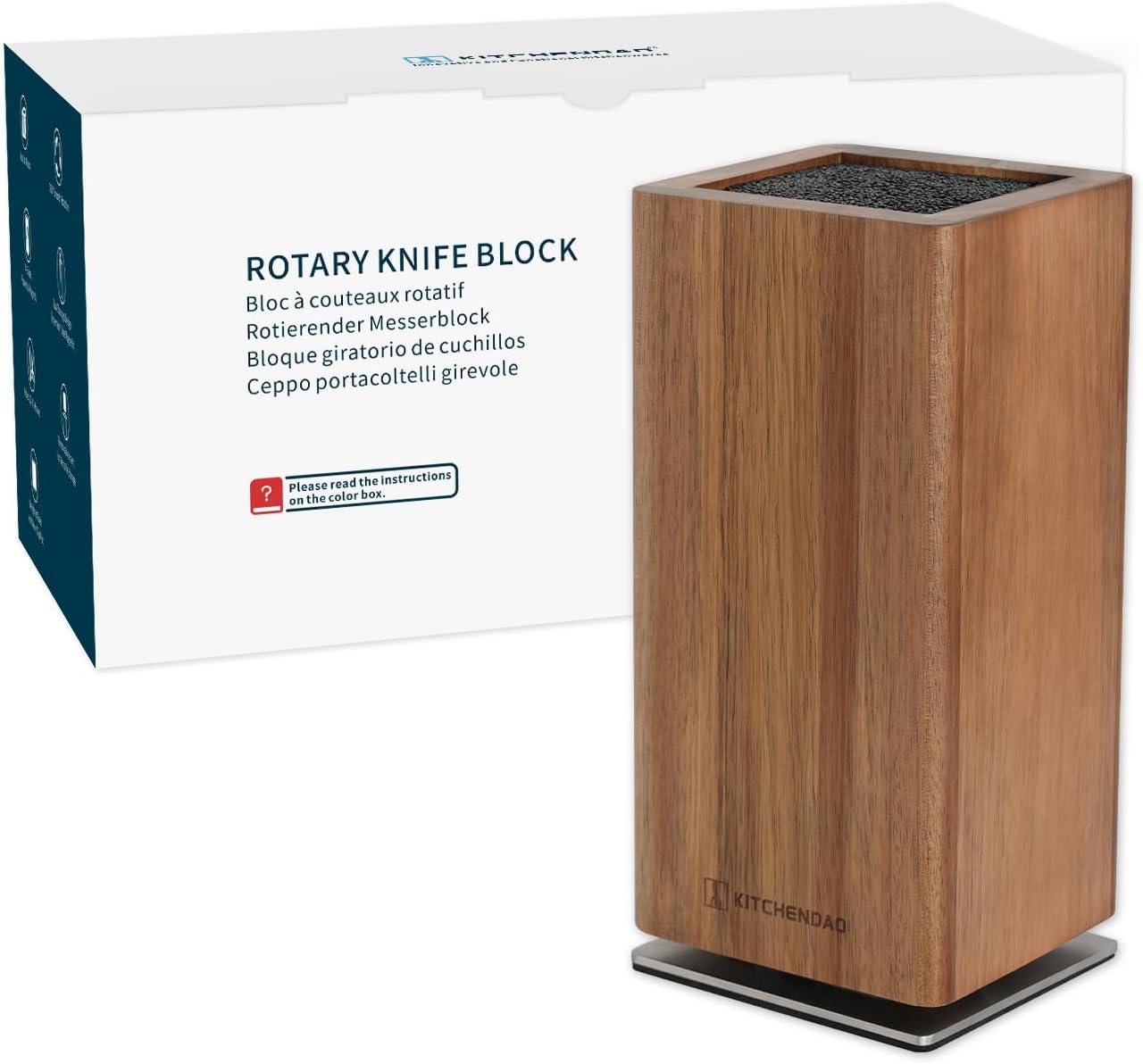
KITCHENDAO Magnetic Knife Block without Knives, 360° Rotatable Acacia Wood Knife Holder, Large Knife Storage with Magnet for Knives & Utensils, Kitchen Countertop Organizer
Acacia counter block with magnets instead of slots and a face that rotates a full turn, sized for knives and utensils. Sold without knives, so it suits a recipient who already owns a set they like.
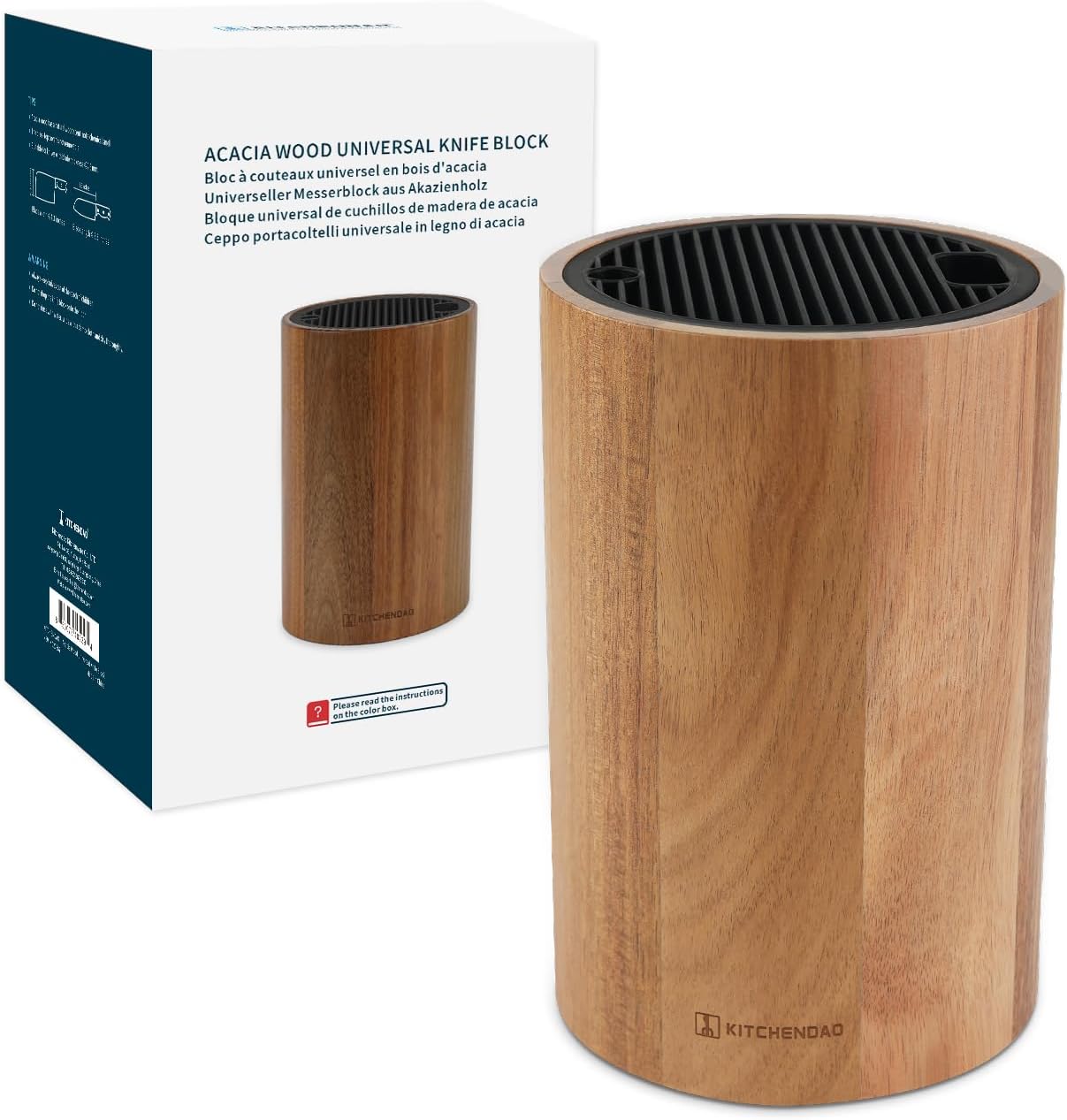
KITCHENDAO Universal Knife Block Without Knives, Acacia Wood Knife Holder, Space-Saving Round Knife Storage Organizer for Countertop, with Slots for Scissors and Sharpening Rod
Round acacia counter block with individual slots, including dedicated openings for kitchen scissors and a sharpening rod. Sold without knives.
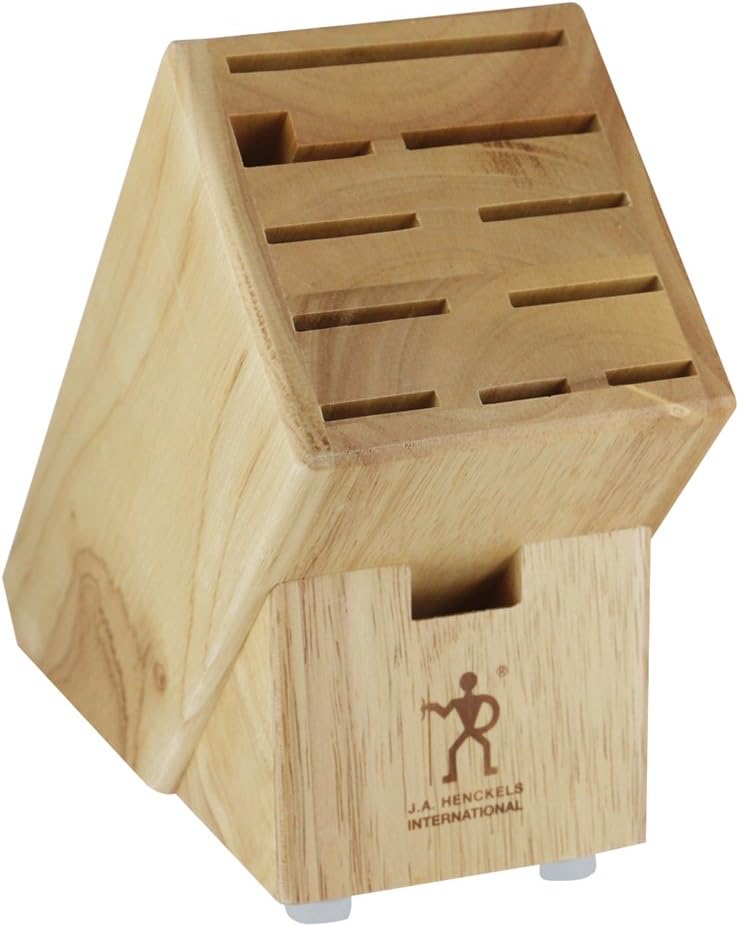
Henckels 11-Slot Knife Block, Natural
Natural wood block with 11 slots in the conventional angled shape. The most familiar design in the group, which makes it easy to pair with a standard set of stamped knives.
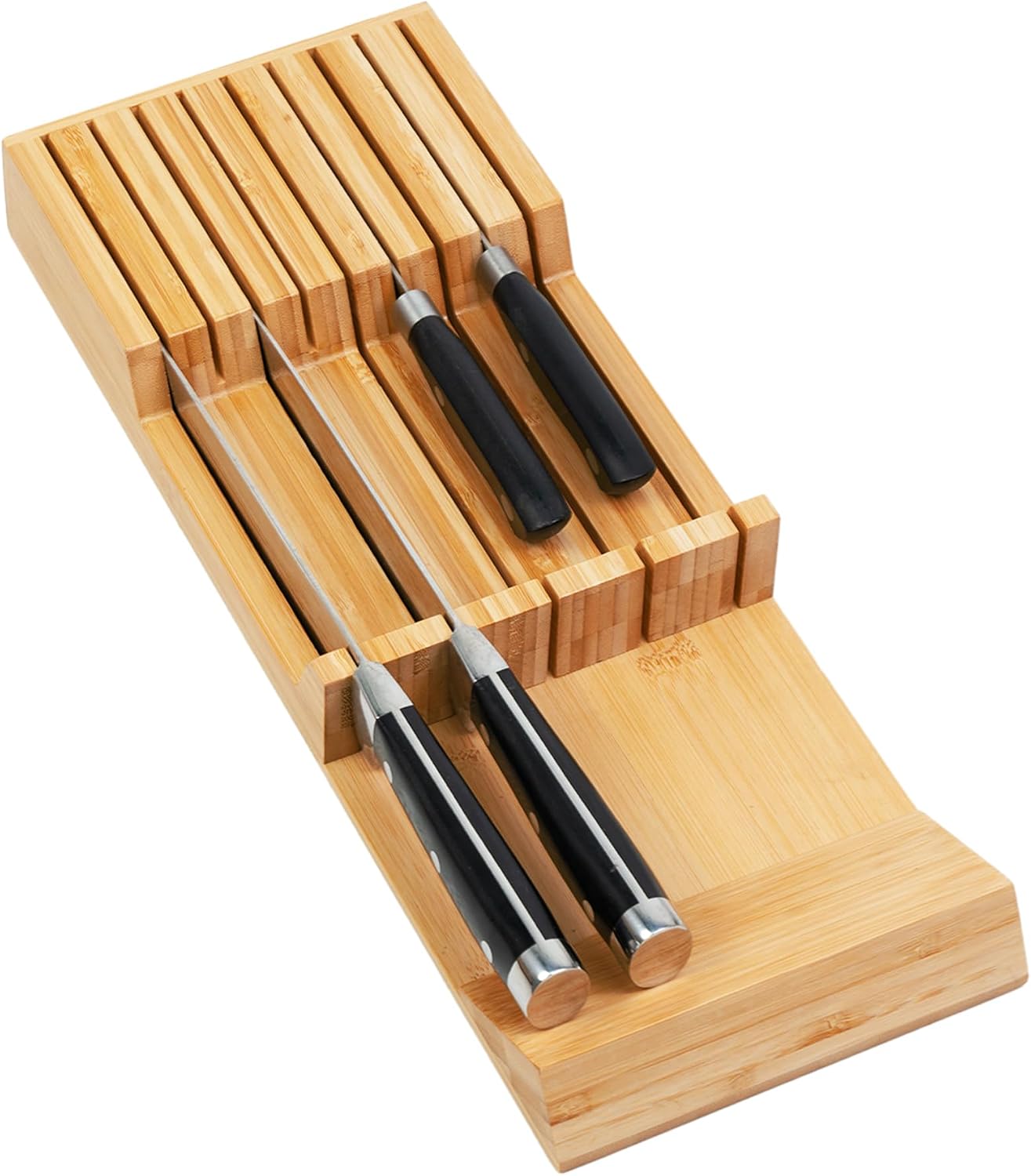
Utoplike Knife Drawer Organizer, Bamboo Knives Block for Kitchen Drawers
Bamboo in-drawer organizer that stores knives flat below the counter instead of on it, freeing the countertop entirely. The simple choice for a drawer that holds a handful of blades.
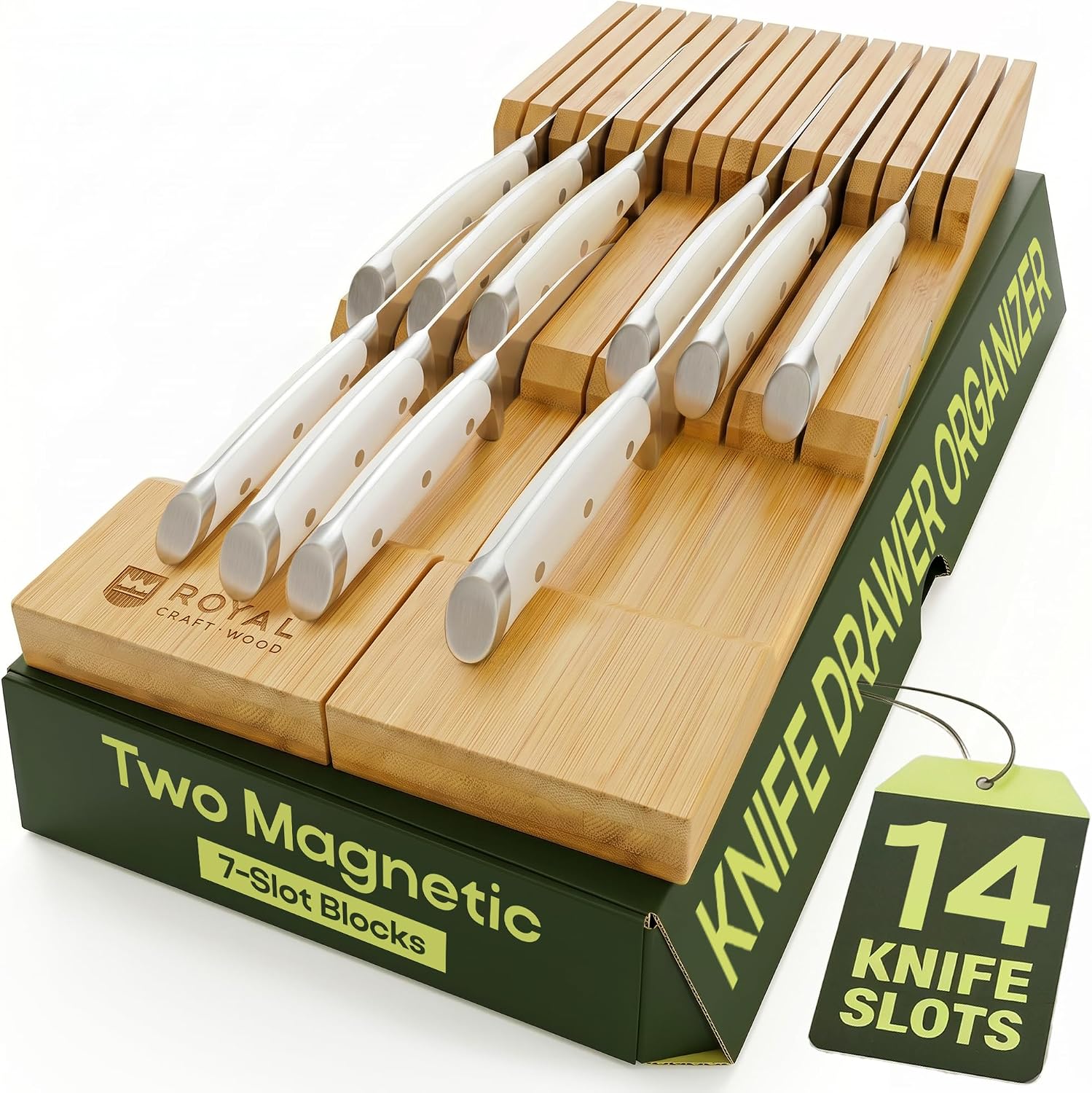
Knife Drawer Organizer – Bamboo In-Drawer Knife Block for 14 Knives, Premium Drawer Knife Organizer Insert, Kitchen Knife Holder for Safe Knife Storage, Compact Kitchen Organization & Drawer Storage
Bamboo insert with 14 slots, built for a cook who wants every blade assigned a place and the counter kept clear. Drawer storage for a fuller set rather than a starter one.

Lifewit Magnetic Drawer Knife Organizers Insert Pastic for 16 Knives, Gray
Gray plastic drawer insert that holds up to 16 knives with magnets rather than fixed slots, so blade width never becomes a fit problem. Plastic is the one body here that never needs oiling.
How these products were compared
This guide compares capacity and slot or magnet design, counter versus drawer footprint, wood or plastic construction and finish, cleaning and care, and the fit details a listing tends to leave out, such as drawer depth and clearance under an upper cabinet. That last group is the question that decides most knife blocks for gift giving purchases. Nothing here is presented as hands-on testing. The comparison draws on the product data published for each model, and names, images, and links are matched to the exact item shown so every card points at the product in its own heading. Use the link on a card to confirm current price and availability, since neither is fixed and neither is quoted here.
How to choose the right knife block
For a countertop block, measure the height from the counter to the underside of the upper cabinets, then check the block against the remaining gap. Measure the usable counter depth as well: a block that leaves too little room in front of it makes the main work area cramped, and a rotating model needs clearance on all sides to actually rotate.
For a drawer insert, measure the inside width, depth, and height of the drawer, then close it and open it fully with the tape in place. Inserts are usually the piece that fails a fit check, and an organizer that lifts the drawer lining or stops the drawer an inch short gets pulled out and never used. That is why the trim-to-fit approach exists: a maple organizer cut to the drawer opening handles an odd drawer size that a molded bamboo insert cannot.
Count the knives and note the two that matter, the longest blade and the widest handle. Blade length decides whether a slot or a magnetic face will hold the knife at all, and handle material decides how much clearance the knife needs to sit flat. A heavy riveted handle wants more room than a molded one, and a magnetic face will hold either.
Wood blocks need occasional oiling and should never be soaked. Bamboo and plastic inserts need a wipe and a dry before knives go back in. In every case the blade goes in dry, because a damp blade against wood is a food safety question and a durability question at the same time.
If counter space and drawer space are both short, an open wall strip is the alternative, and the best magnetic knife strips for small kitchens covers that format. Inside the drawer, the choice is mostly fixed slots versus magnets, the same trade-off the countertop blocks present.
For precision cutting, none of this changes the knife itself. What a block changes is whether the edge survives storage, which is why slot shape and magnet placement matter more than the finish.
KITCHENDAO Magnetic Knife Block without Knives
The top pick is a counter block built around magnets instead of slots. The face is acacia, the whole unit rotates a full turn, and the magnetic surface is meant for knives and utensils, so a pair of tongs can hang alongside the chef's knife. Because there are no fixed slot widths, it does not care whether the recipient's set came from a wedding registry, a restaurant supply store, or a drawer of mismatched blades.
For gifting, that flexibility is the whole argument. You do not have to know the recipient's knife sizes, you do not have to know whether their chef's knife is a wide European pattern or a thin Japanese one, and you do not have to guess at handle thickness. The block holds what it holds.
The trade-offs are real. Blades sit exposed on the face, which is the wrong choice in a house with a toddler who can reach the counter. The block ships without knives, so it is storage and nothing more. And a rotating unit needs free space around it, which is a problem on a counter already crowded under a cabinet run.
Durability with any wood block comes down to the material and the finish, and acacia is a sensible choice for a wet room. It still needs a dry blade and an occasional oiling, and it will show a mark if a knife is dropped against the face instead of seated on it.
Alternatives to consider
The KITCHENDAO Universal Knife Block Without Knives is better suited to a recipient who wants a designated place for every item, because it is a round acacia counter block with slots rather than magnets, and it includes openings for kitchen scissors and a sharpening rod. The Henckels 11-Slot Knife Block, Natural is a stronger fit when the gift should read as conventional: 11 slots, natural wood, a shape most cooks recognize, and a name that needs no explaining.
The Utoplike Knife Drawer Organizer, the Knife Drawer Organizer – Bamboo In-Drawer Knife Block for 14 Knives, and the Lifewit Magnetic Drawer Knife Organizers Insert cover the no-counter-space case from three angles. The Utoplike insert is the simplest bamboo option and the one to pick when the drawer only has to hold a few blades. The 14-slot bamboo block assigns a slot to each knife and suits a cook keeping a full set in one place. The Lifewit insert takes the magnetic route in plastic for up to 16 knives, so there are no slot widths to fight and no oiling.
One more option in this category is not a gift in the usual sense. The Rev-A-Shelf Maple Wood Trim-to-Fit Knife Block Drawer Organizer is cut to the drawer opening and holds far more blades than a molded insert. It is the right answer for someone planning a drawer rebuild and the wrong answer for a wrapped box, since fitting it takes a utility knife and a free afternoon.
Day-to-day use and maintenance
Every wood block here asks for the same routine: knives go in dry, the block gets wiped rather than washed, and the wood gets a thin coat of food-safe oil when it starts looking thirsty. Soaking is the failure mode. A block left in the sink absorbs water, the joints open, and the slots go from snug to loose.
Blades deserve the same attention. A knife that goes back into a slot wet will rust at the edge and stain the wood around it, and a magnetic face holds a wet blade flat where the moisture has nowhere to go. Dry the blade, then store it.
Drawer inserts change the cleaning rhythm. Crumbs collect in the bottom of a drawer, and an insert that cannot be lifted out makes that drawer hard to clean at all. Bamboo and plastic inserts lift out; a trimmed maple organizer is fastened in place, which means vacuuming around it.
There is a food safety point most gift guides skip. A block that stores raw-meat knives beside the bread knife should be cleaned more often than one holding only vegetable blades, and the slot interiors are the part people forget. A bottle brush or a cloth pulled through each slot handles it.
Then ergonomics. The block has to let the recipient pull a knife with one hand while the other hand is full, which is why a tall block with tight slots at the back of the counter gets abandoned. Put it where the cook actually stands, not where it photographs best.
Buying checklist
- Measure the height from counter to upper cabinet, or the inside width, depth, and height of the drawer.
- Count the knives and note the longest blade and widest handle rather than shopping by slot count.
- Choose fixed slots for a defined set and a magnetic face for a set that may change.
- Confirm whether knives are included, since almost none of these blocks ship with them.
- Read the cleaning and oiling instructions for the wood before the first use.
- Verify current price, availability, and return terms through the retailer link.
Final recommendation
Choose the KITCHENDAO Magnetic Knife Block without Knives when the gift goes to a cook whose knives you have never counted and the counter has room for a unit that rotates. Choose the KITCHENDAO Universal Knife Block Without Knives when scissors and a honing rod live on the counter and each wants a slot. Choose the Henckels 11-Slot Knife Block, Natural when the kitchen is traditional and the existing set is a standard one, and pick one of the bamboo or plastic inserts when counter space is the binding constraint.
Where the product data does not separate two options in any way that matters for the kitchen in question, the honest answer is that either will do and the measurement is the decision.