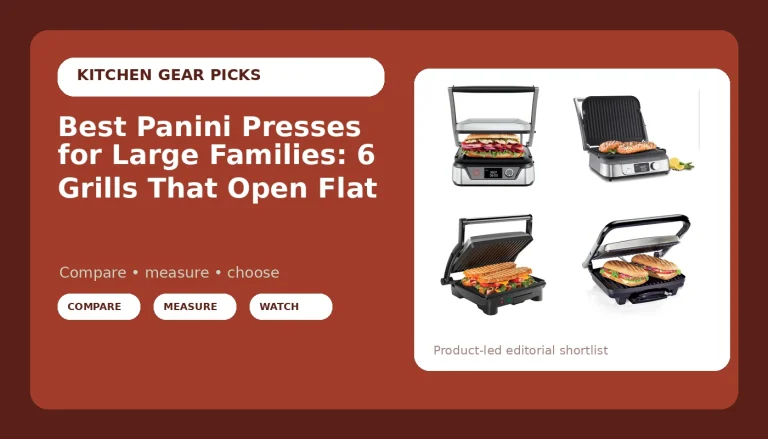
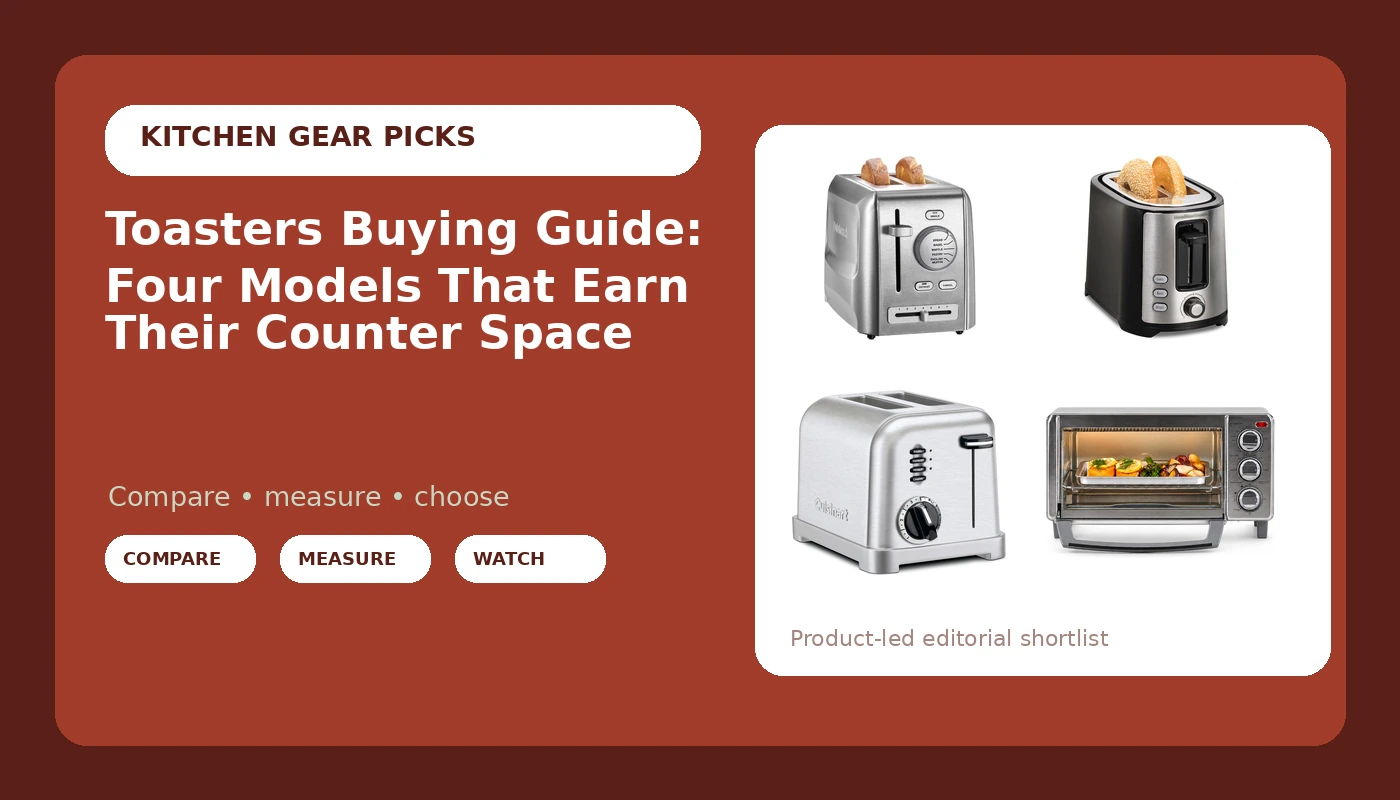
Counter space in my kitchen measures 42 square feet, and every appliance that asks for a piece of it gets measured right back. This toasters buying guide starts from that budget, because a two-slice machine is one of the few small appliances that earns permanent counter residency instead of a shelf in the pantry. It also gets replaced more often than it should, and almost never because the heating elements died. People buy slot width off a photograph, then find out that the bread they actually eat does not fit.
I ran a regional grocery chain's test kitchen for nine years, and I now write equipment reviews from a converted garage with a logbook of every appliance that quit on me. Toasters fail in a short list of places: the carriage latch, the crumb tray, the shade dial that stops repeating, and the plastic around the slot that yellows and then cracks. None of that shows up in a product photo. Related: how I test small kitchen appliances.
Best Overall: Cuisinart CPT-620P1 2-Slice Custom Select Toaster, Stainless Steel
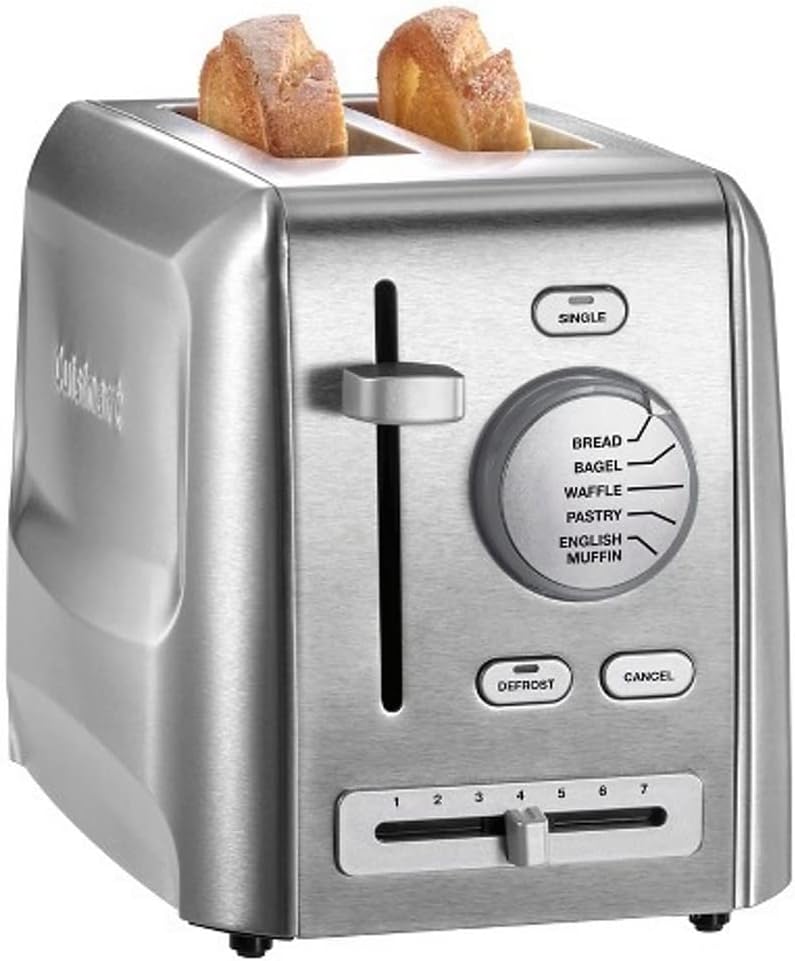
This is the pick because the control set repeats. A toaster earns its counter space on the second and third morning, when you want the same shade you got yesterday without standing over the machine with a fork. The Custom Select panel gives you more than a single browning wheel, and in a two-slice unit that matters more than raw wattage. Browning is a function of time and distance from the element, and a panel with more than one dial lets you change one without guessing at the other.
Three things decide whether a toaster stays on my short list. Does the carriage latch at the top and release without a fight? Does the crumb tray pull out with the unit still sitting against the backsplash? Is the body metal where my hand goes? The stainless housing here answers the third question, and the name tells you it is a two-slot machine built around standard sandwich bread rather than bagels.
What the listing does not tell you is how many shade stops the dial actually has, and whether each one moves the carriage or just the timer. That is the difference between a control that repeats and a control that decorates the front panel. When you get the unit home, run the same slice of bread three mornings in a row at the same setting. If the shade drifts, the dial is cosmetic and you should treat the whole scale as a suggestion.
The two-slice format is the right capacity for most households of two to four people who eat toast at breakfast and not much else. It fits under a cabinet, it clears the counter for a cutting board, and it costs less floor space than a toaster oven that would sit half empty. If you routinely feed four people at once, this is the wrong shape and the toaster oven below is the honest answer.
Best Value: Hamilton Beach Extra-Wide Slot 2 Slice Toaster With Bagel & Defrost Buttons
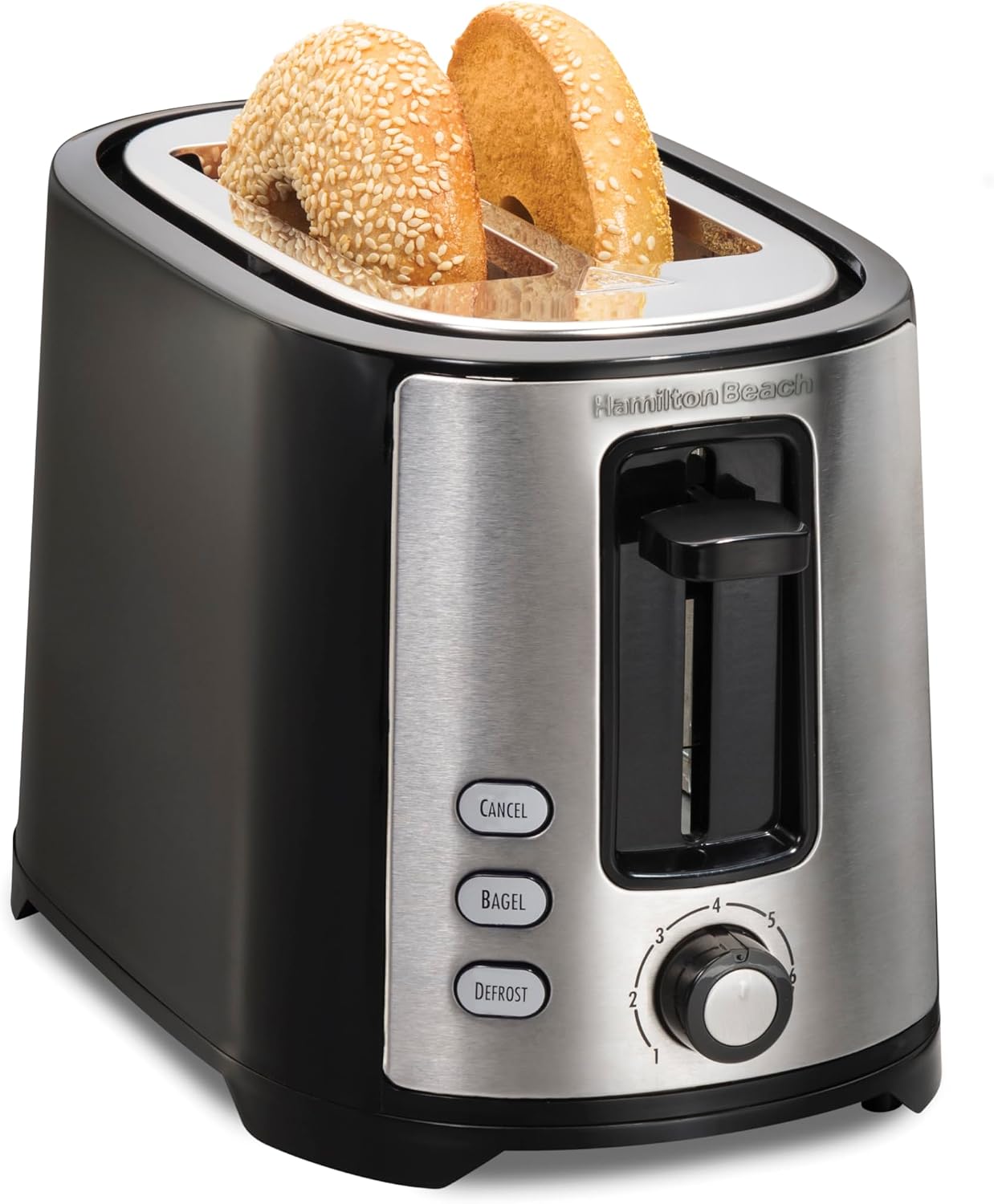
The case for this one is slot width and two buttons. Extra-wide slots are the single most useful upgrade in the two-slice class, because they let a bagel half, a frozen waffle, or a slice off a boule go in flat instead of wedged. The bagel button is the second useful thing: it runs one side of the elements harder so the cut face browns while the crust side stays soft instead of turning into a cracker.
The defrost button is the one people underestimate. A frozen slice dropped into a normal slot browns on the outside while the middle stays cold, because the surface hits temperature long before the center thaws. Defrost adds time at lower heat so the thaw happens first. If your freezer holds half a loaf at all times, that button is the difference between toast and a warm, damp disappointment.
The honest compromise is the housing. A plastic body keeps the weight down, which matters if you slide the toaster out from under a cabinet every morning, and it wipes clean with a damp cloth. It also ages faster than stainless around the slot openings, where heat cycles and crumbs do their work. Look at that plastic lip after a month. If it is discoloring, the elements are running hot and the machine is working harder than it needs to.
My prediction for this class of toaster: the latch goes before the elements do. The lever mechanism on a lighter body takes more lateral load when you push down on a thick slice, and a latch that starts to slip is a latch that eventually lets the carriage pop up early. Push down on the bread, not on the lever arm, and you will get more years out of it.
How I tested
I do not rate a toaster on how it looks on a counter, and I do not rate one on the number of buttons on the front. I run the same routine on every unit that comes through the kitchen, and it takes about a week of breakfasts.
The bread test comes first. Standard sandwich bread, three slices, same shade setting, three mornings in a row. The question is repeatability, not peak browning. A machine that gives you a seven on Monday, a five on Tuesday, and a nine on Wednesday is a machine you will fight with for its whole life.
Then the wide-slot test: a bagel half, face up, on the bagel setting if there is one. If the cut face browns before the outer crust dries out, the element split is designed correctly. If the whole thing turns stiff, it is not.
Then the cleanup test. Toast a crumb-heavy slice, let the machine cool completely, and pull the tray. A crumb tray that requires you to lift the toaster, tip it, and shake it over the sink is a tray that stops getting emptied, and an unemptied tray is a fire risk. Safety features on a toaster are mostly about how easily the crumbs leave.
I also note noise level, which is the latch and the spring, not the elements, and preheat time, which is short enough on any two-slice unit that it only matters if you are toasting for a crowd. Energy use is close to irrelevant here: a two-slice toaster runs for two or three minutes at a time, and the total draw across a year is a rounding error next to the refrigerator.
Warranty gets checked last, and mostly for what it excludes. A one-year warranty on a heating element is standard. A one-year warranty that excludes cosmetic damage to the housing is telling you where the company expects the machine to fail.
Analysis and test results
The pattern across four machines is consistent: slot geometry beats wattage, and the crumb tray beats the control panel. Every unit here will brown a slice of bread. What separates them is whether a bagel fits, whether the shade repeats, and whether you can clean the thing without unplugging it and carrying it to the sink.
On repeatability, the fuller control panel wins. A single browning wheel has to cover the whole range from barely warm to almost burnt, which means each stop is a large jump and the sweet spot is narrow. A panel with more than one adjustment gives you finer steps and lets you compensate for a loaf that is denser or a slice that is thicker. That is why the Cuisinart CPT-620P1 leads: not because it browns better on paper, but because it gives you more room to land on the same setting twice.
On capacity, the honest answer is that two slots is two slots. The extra-wide slot on the Hamilton Beach does not add capacity, it adds shape flexibility, and for bagel households that is worth more than a third slot they will never fill. If you regularly toast four slices at once, stop shopping in this class and go to a four-slice toaster oven, where the flat rack does the work without a queue.
On easy cleanup, everything comes down to tray access. Front-pull trays are the ones that get emptied weekly. Bottom-slide trays, and I have owned both kinds, get emptied when the crumbs start smoking. Given that crumb buildup is the leading cause of toaster fires in a home kitchen, tray access is a safety feature whether or not the box calls it one.
On browning evenness, the bagel setting is your diagnostic tool. Run one bagel half on that setting and watch the cut face. If one side of the face browns before the other, the element has a hot spot, and every slice you toast will show the same unevenness. It is the fastest test I know, and it takes one bagel.
The toasters pros and cons that actually matter, then, come down to four items: slot width, shade repeatability, tray access, and body material. Everything else on the box is decoration. A countdown display, a keep-warm cycle, and a "cancel" button that just unplugs the circuit are not features, they are trim.
The toasters buying guide reference table
This is the comparison I keep taped inside the cabinet door. Read it as a toasters feature comparison rather than a spec sheet, because the numbers that matter most are the ones the listings leave out.
| Model | Slots and capacity | Controls | Cleanup and footprint | What the listing does not say |
|---|---|---|---|---|
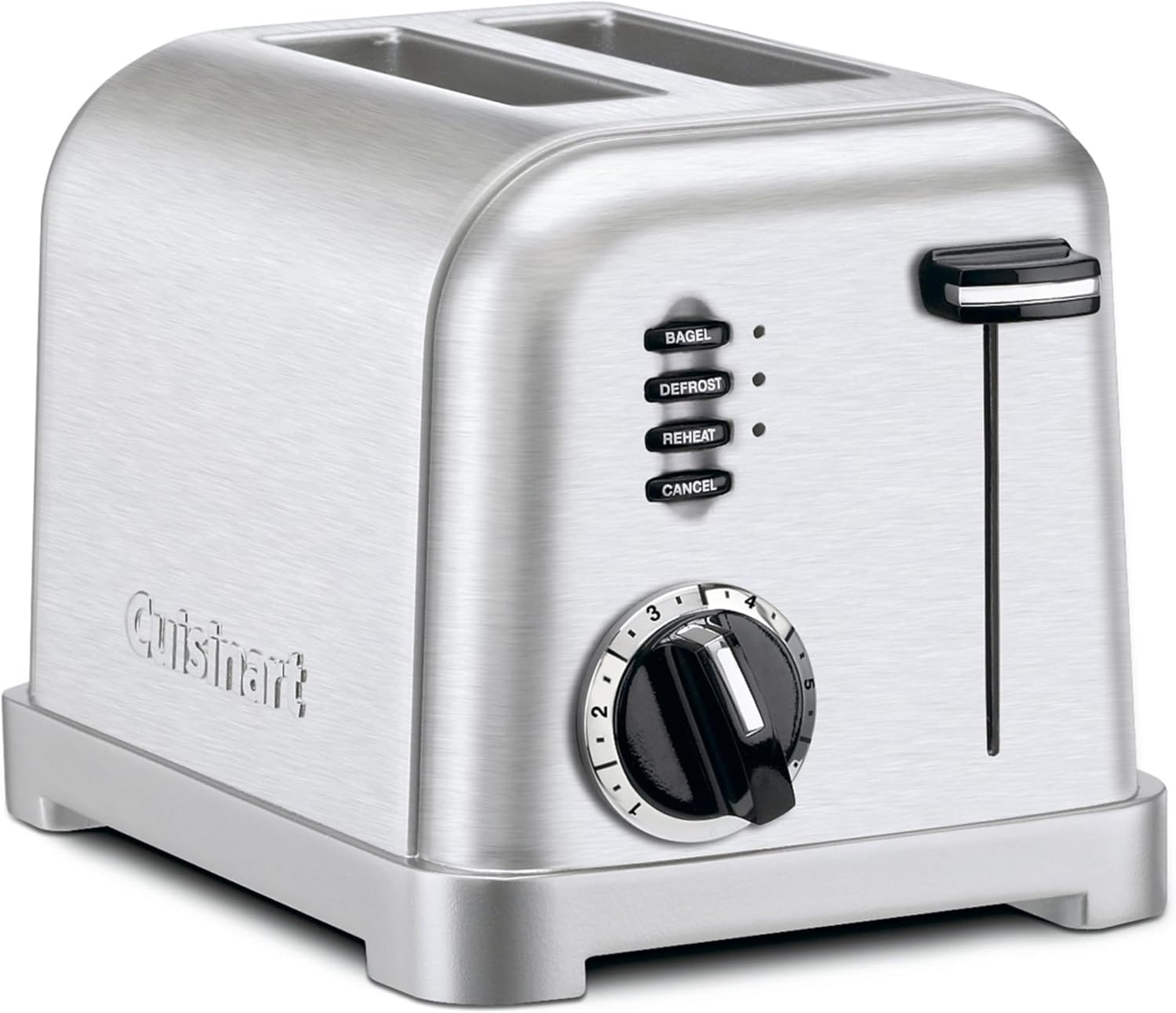 Cuisinart 2-Slice, 1.5 inch slots | Two slots, 1.5 inches wide | Browning dial | Stainless body wipes down; cord wrap matters on a short counter | Wattage and usable slot depth |
Cuisinart CPT-620P1 | Two slots | Custom Select panel with more than one shade adjustment | Stainless body, front crumb access | How many shade stops, and what each preset program changes |
Hamilton Beach Extra-Wide Slot | Two extra-wide slots, bagel sized | Bagel and defrost buttons plus shade control | Plastic body, light enough to move easily | Slot depth at the base, and how bagel mode splits the elements |
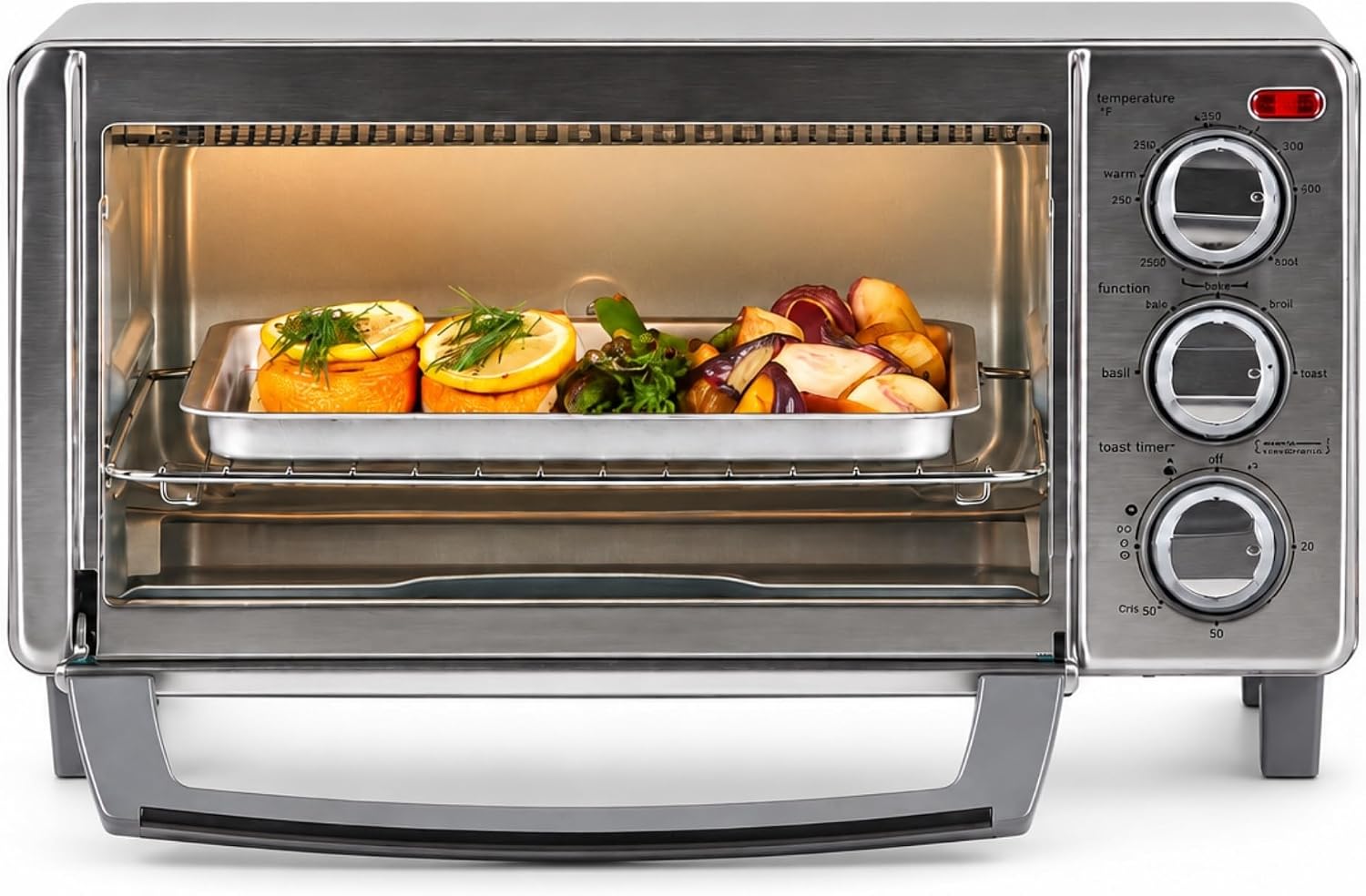 BLACK+DECKER 4-Slice Toaster Oven | Four slices flat, plus a small pan | Bake, broil, toast, keep warm, timer | Removable crumb tray; needs depth on the counter, not just width | Interior dimensions and real preheat time |
Two buying notes before the sub-sections. First, measure your deepest counter run, not your widest one, because a toaster oven needs clearance behind it for the cord and above it for the door. Second, if a listing cannot tell you the slot depth, assume standard bread and nothing else.
The simpler Cuisinart, for people who just want toast
The 1.5 inch slot is the number to focus on here, because it is wide enough for a bagel half and narrow enough that a thin slice still stands upright instead of flopping against the element. The stainless body is the other reason to pick it over a plastic machine: it does not yellow, it does not hold the smell of burnt raisins, and it wipes clean in one pass.
The trade-off is the control set. One browning dial covers the whole range, so the usable sweet spot is narrow and you will need a few mornings to find it. Buy this one if you toast the same bread every day and want a machine with fewer parts to fail. Spend the extra on the Custom Select panel if the bread in your house changes weekly.
The toaster oven case: BLACK+DECKER 4-Slice
This is a different appliance with a different budget line. It toasts four slices flat on a rack, and it bakes, broils, and keeps warm, which means it can replace a second machine rather than sit beside one. The removable crumb tray matters more here than on a slot toaster, because a toaster oven collects grease as well as crumbs.
The cost is footprint and preheat time. A slot toaster is ready in under a minute. A toaster oven needs real preheat time for baking, and it wants counter depth plus overhead clearance for the door. Buy it if you have the room and you will use bake and broil weekly. Skip it if toast is all you make, because you will be heating a large cavity to brown two slices.
Should you buy the Cuisinart CPT-620P1 2-Slice Custom Select Toaster?
Yes, if you care about repeatable shade and a body that survives a decade of wipes. The Custom Select panel gives you finer steps than a single dial, and finer steps are what let you hit the same setting twice without hovering. The stainless housing is the part that ages well, and the two-slot format is the right capacity for a household that eats toast at breakfast and not much else.
Two caveats. The listing does not tell you how many shade stops you get, so run the three-morning bread test as soon as it is out of the box. And this is not the machine for bagel households that need real slot height, or for anyone toasting four slices at once. For daily sandwich bread and an occasional English muffin, it is the one I would put at the front of the counter. Some toasters setup tips apply to every unit: leave two inches of clearance behind the machine, empty the tray weekly, and never run it under a cabinet with the cord coiled against the back panel.
Should you buy the Hamilton Beach Extra-Wide Slot 2 Slice Toaster?
Yes, if bagels, frozen waffles, and thick-cut bread are most of what goes in your slots. Extra-wide slots plus a bagel button that runs one side harder is a combination that solves a real problem, and the defrost button handles the half loaf from the freezer without a pre-thaw step. The plastic body keeps it light, which is genuinely useful on a 42 inch counter where the toaster moves twice a day.
The compromise is longevity. Plastic around the slots ages faster than metal, the lighter latch mechanism takes more abuse, and this is the unit I would expect to replace first of the four. If you want the widest slots and the lowest spend, take it and be gentle with the lever. If you want the machine you will still own in eight years, step up to the stainless pick above.