Most bread recipes are written for one or two loaves, and most loaf pans are sold in sets of four to eight. That mismatch is the practical problem behind any search for the best loaf pans for small batches. If you bake a single sandwich loaf on Sunday and a pair of small sourdoughs on Saturday, a six-pan set eats shelf space you do not have, and one thin pan that buckles at 450 F costs you an afternoon of dough handling. This guide sticks to pans that make sense in a small kitchen with a single oven rack in play: 8 x 4 and 9 x 5 open pans, lidded Pullman pans, and sets sized from one to eight pieces. The comparison covers bakeware material as published, interior dimensions and measurement accuracy, whether a lid is part of the design, and how each pan is rated against oven temperature at the top of a bread baking range. No current prices appear here because listings move, so use the links to confirm cost and availability. Where a listing is silent on a detail, I say so rather than fill the gap.
Quick answer
The Pullman Loaf Pan with Lid, 2 Pack 2.2 LB & 1 LB Dough Capacity is the strongest fit for baking one or two loaves at a time because the set pairs two stated dough capacities with lids in the same box, so a small batch can be baked open for a sandwich loaf or closed for a square Pullman without a second purchase. Choose the NutriChef Loaf Pans Set of 4 instead when you want four identical open pans, a stated 450 F oven rating, and a coating the listing describes as free of PFOA, PFOS, and PTFEs.
Loaf pans for small batches worth comparing
Small-batch baking splits into two jobs. One is the single loaf: a pan, ideally with a lid, that lives on a shelf and gets used twice a month. The other is the two or three loaf session: a set that nests into one stack and lets you bake a pair of sandwich loaves in a single pass. Every pan below fits one of those jobs. The published details that separate them are interior dimensions, bakeware material and coating, whether a lid is included, the manufacturer's stated oven-safe temperature, and how much cabinet space the whole set claims.
Top pick
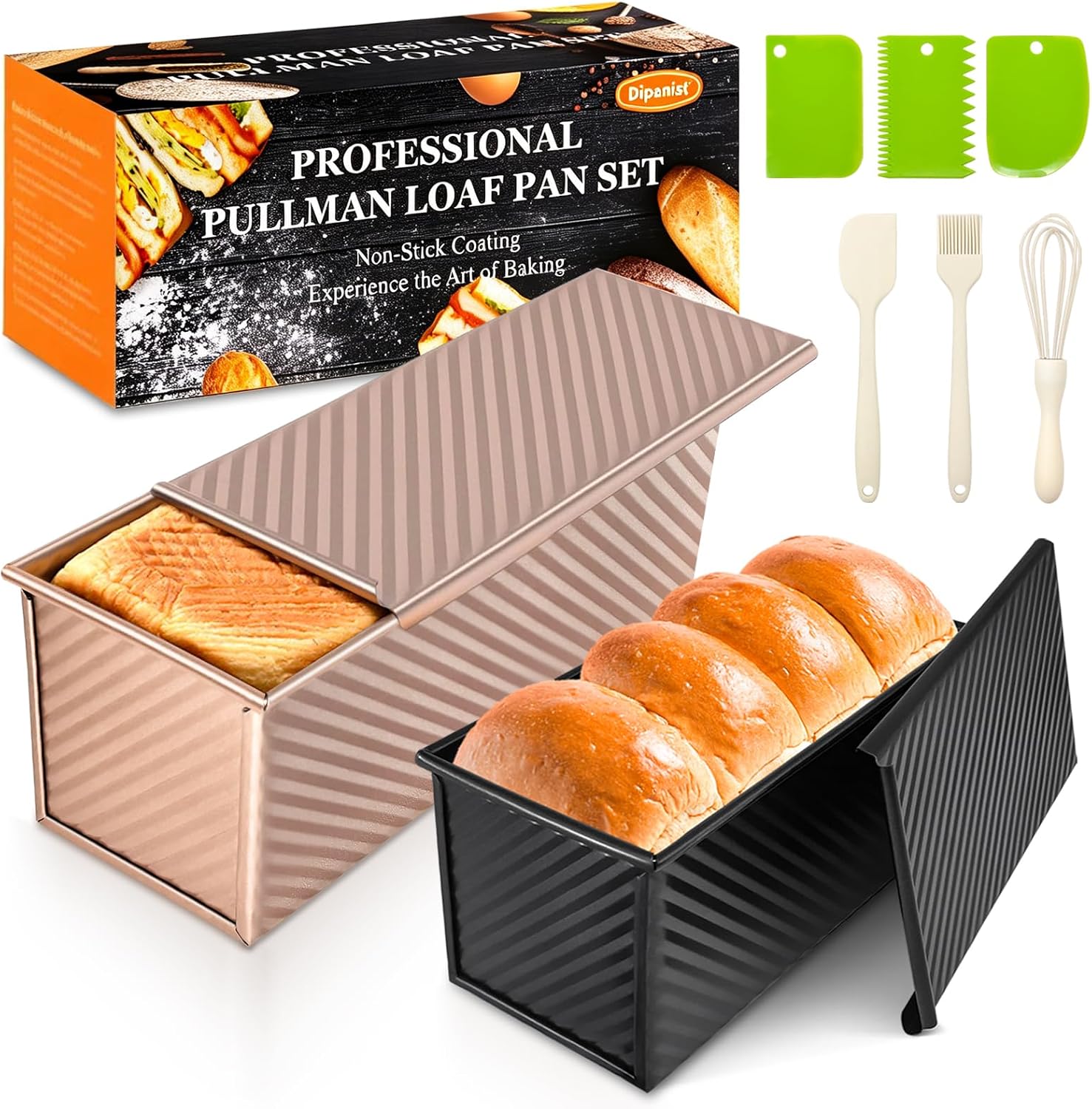
Pullman Loaf Pan with Lid, 2 Pack 2.2 LB & 1 LB Dough Capacity, Non-Stick Carbon Steel Bread Pan for Sandwich Bread and Sourdough Loaves, Square Toast Mold with Baking Tools, Gift-Ready Packaging
Two lidded carbon steel pans with stated dough capacities of 2.2 LB and 1 LB, a non-stick coating, and baking tools in the box. The lids turn either pan into a Pullman mold for square sandwich slices.
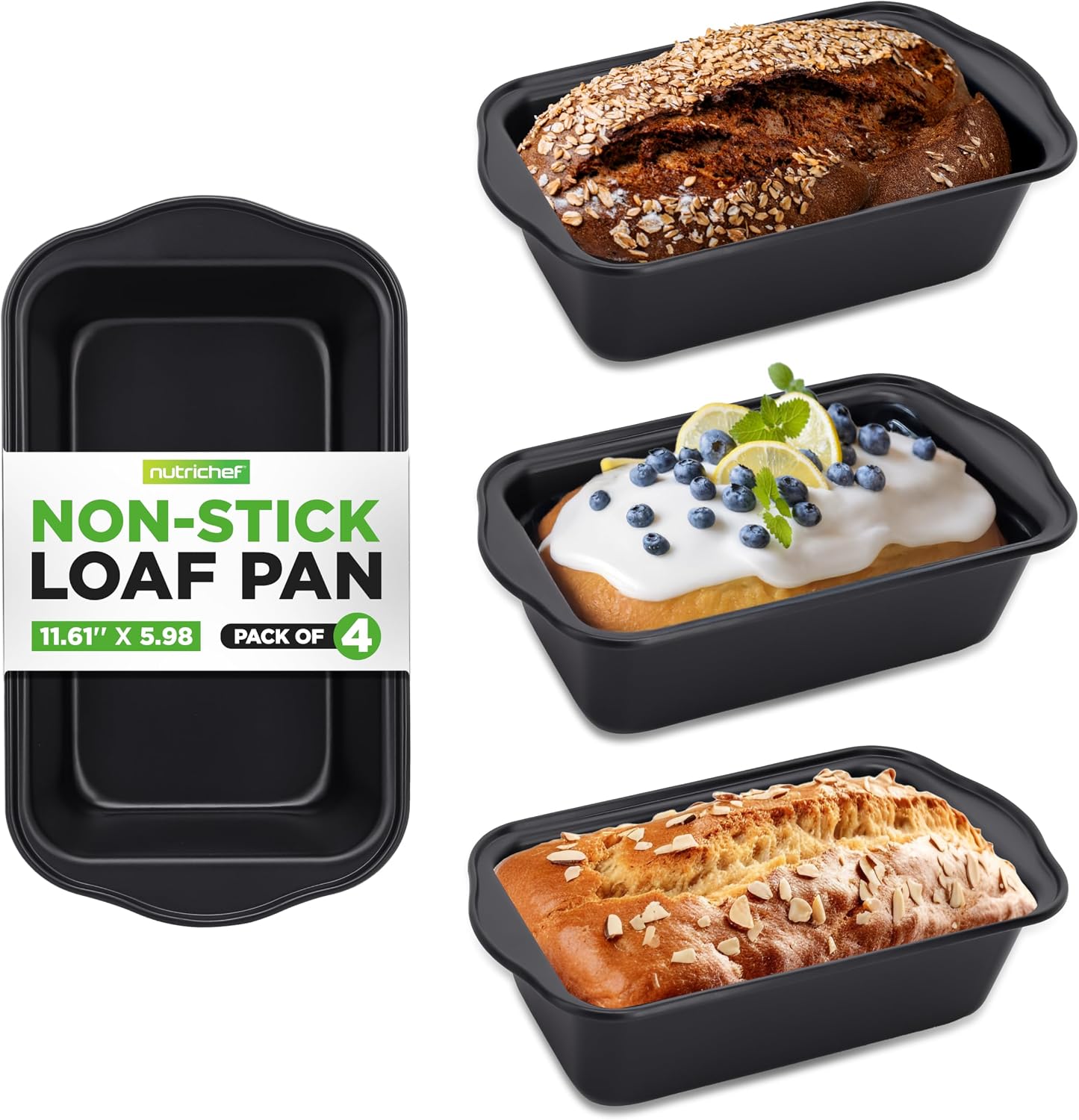
NutriChef Loaf Pans Set of 4 | Non-Stick Premium Bread Pans Quick & Even Heat Distribution | Oven Safe To 450 F | No PFOA, PFOS & PTFEs | Food Grade Carbon Steel | 11.61 x 5.98 x 2.56 Inches (Black)
Four carbon steel pans measuring 11.61 x 5.98 x 2.56 inches, with a non-stick coating, a stated oven rating to 450 F, and a listing that says no PFOA, PFOS, or PTFEs.
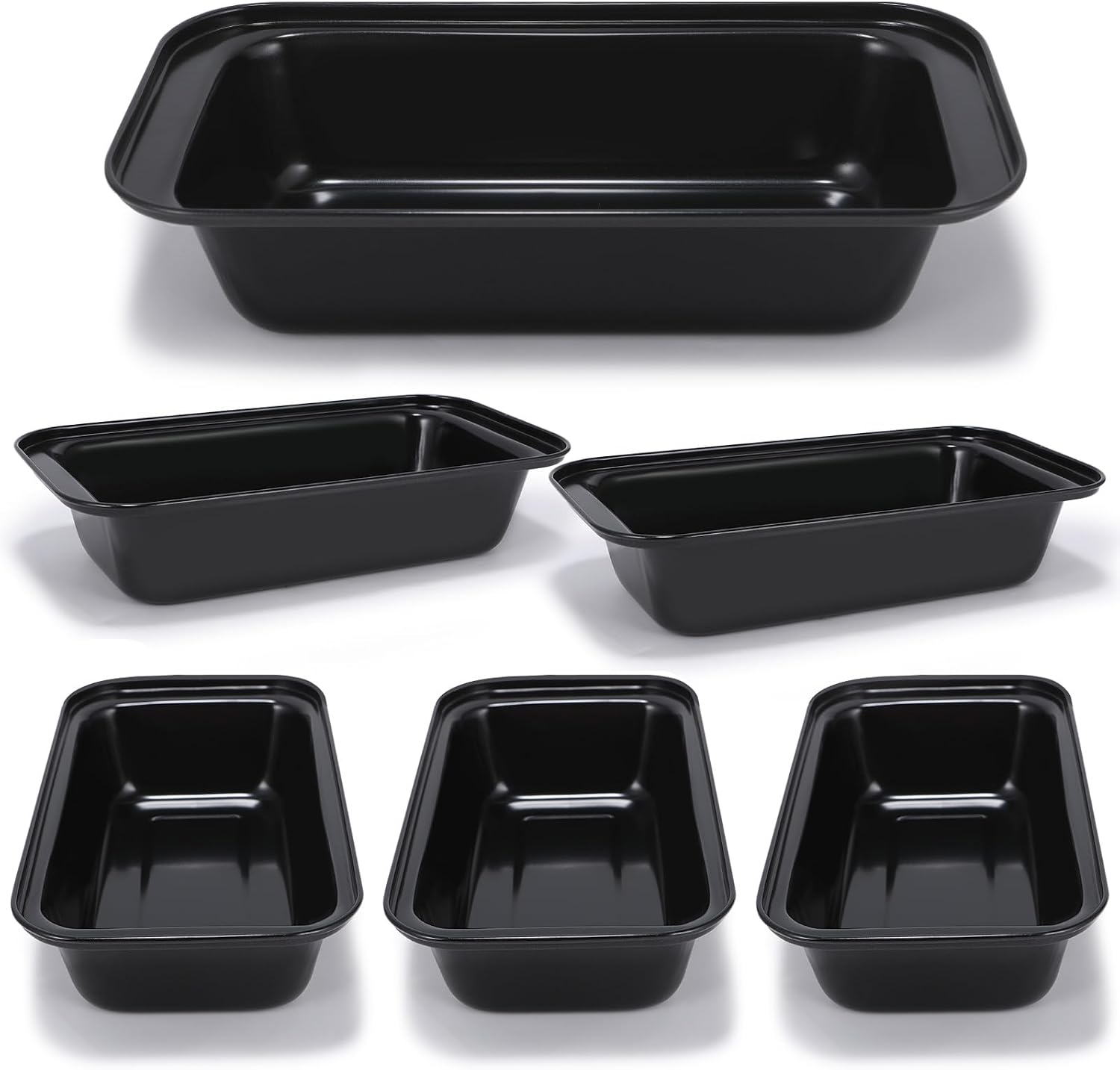
Yoehka 6 Pack Bread Pan Set, Non-Stick 8×4 Carbon Steel Loaf Pans, Black
Six non-stick carbon steel pans at 8 x 4 inches. The compact footprint suits small loaves and tight ovens, and six pans cover a bake-ahead afternoon in one pass.
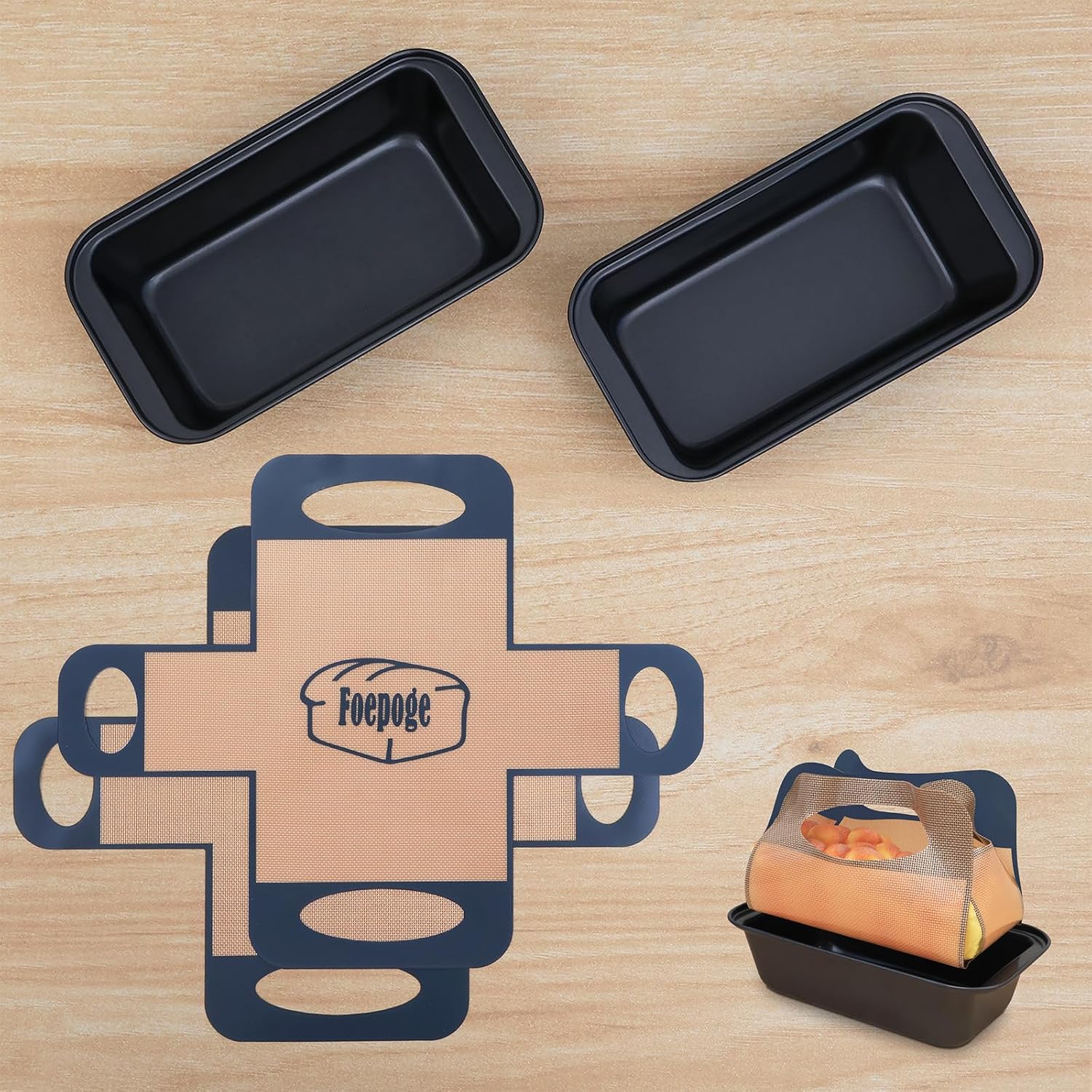
Loaf Pan with Liners Set: Nonstick 9 x 5 Inch Bread Pan for Homemade Baking
A single non-stick 9 x 5 inch pan sold with liners. The liner takes the scraping, which is the part of bread baking that shortens a coating's working life.
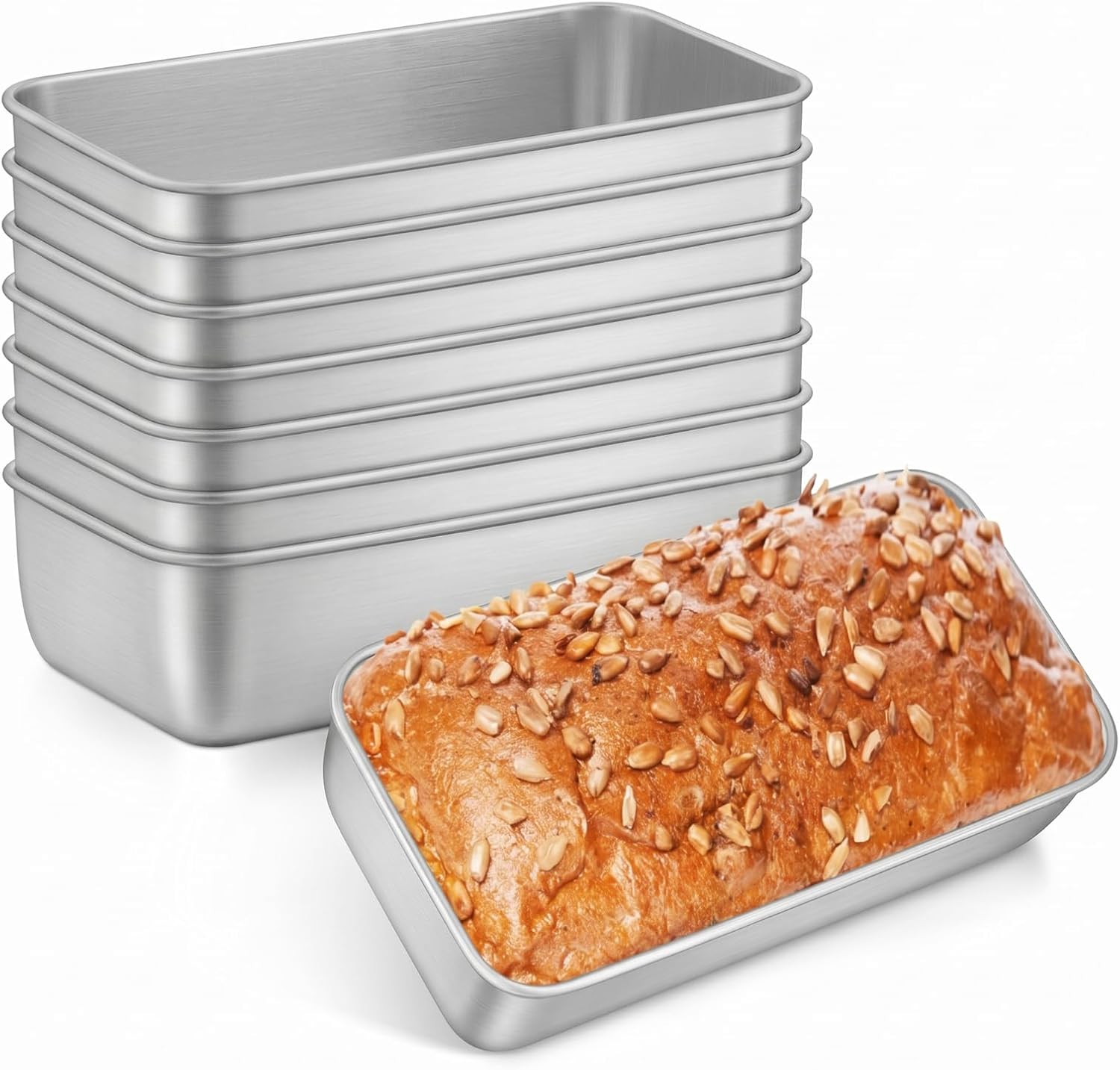
Non-Toxic 9x5IN Stainless Steel Loaf Pan for Baking Bread, 8 Pack
Eight stainless steel 9 x 5 inch pans with no non-stick layer to wear through. Stainless is the option for bakers who would rather manage sticking than replace a coating.
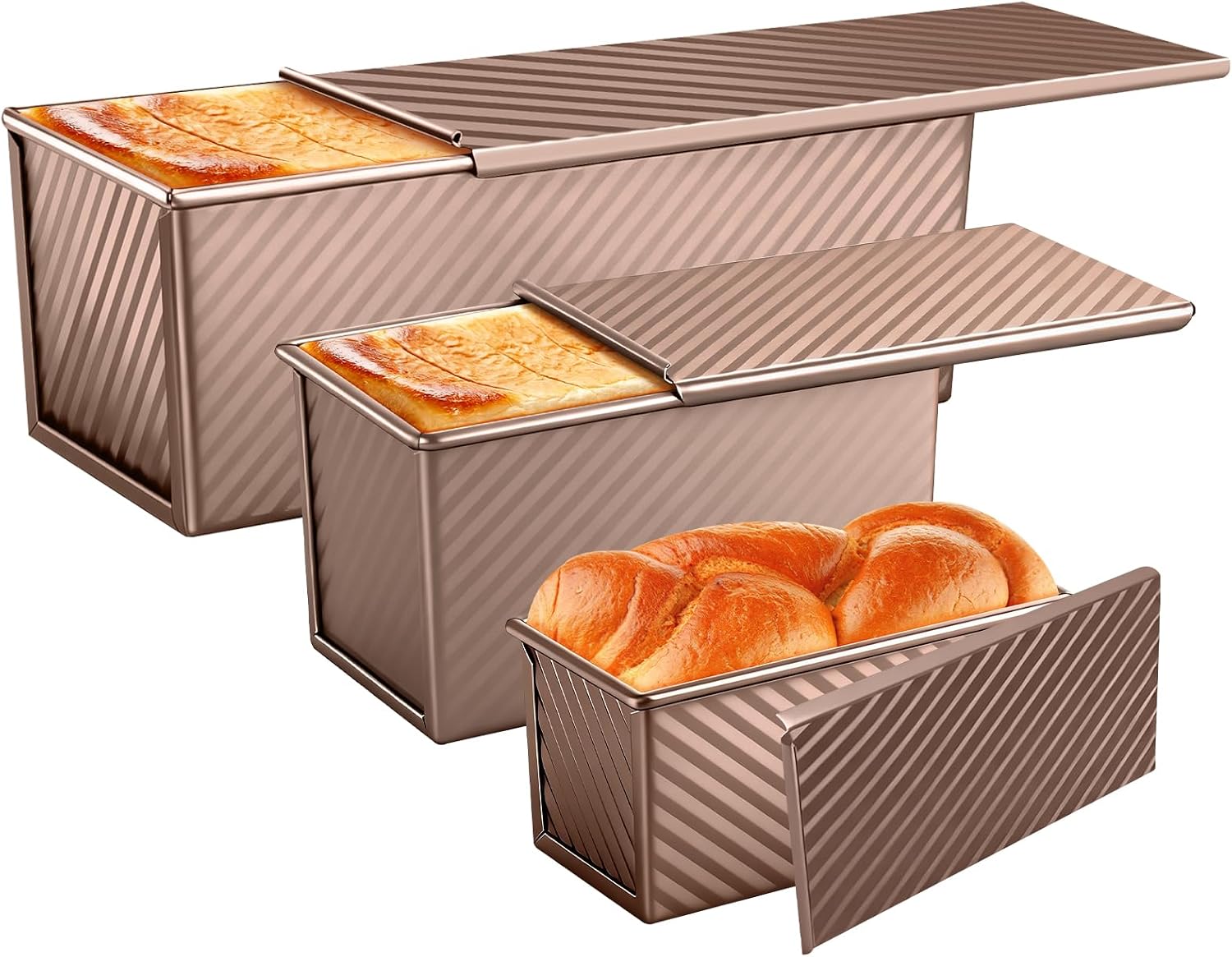
3 Pack Pullman Loaf Pans, Bread Pans with Lids, Golden
Three lidded loaf pans in a gold finish. Lids on more than one pan let a small batch produce several square sandwich loaves at the same time.
How these products were compared
This comparison weighs pan count and interior dimensions, bakeware material and coating, lid design and whether a lid is included at all, the stated maximum oven temperature, and published care instructions. Product names, images, and retailer links are matched one to one so that every card points to the exact pan described in it. Nothing here is presented as hands-on testing: the judgments rest on what the listings state and on how dough behaves in pans of a given size and finish. That is also why no price is typed into the copy. Listings move, and a figure frozen into a guide is stale before it publishes, so the links are the place to confirm cost, stock, and returns.
Most loaf pan reviews online rank a pan on one loaf and stop there. For a small batch, the count matters as much as the bake, which is why the best loaf pans for small batches are not automatically the best pans overall. A long Pullman that turns out a handsome square loaf is still the wrong buy if it will not fit your shelf or your usual dough weight, and a six-pan set is a poor deal for someone who bakes one loaf a week and stores pans in a drawer.
How to choose the right loaf pan
Start with dough weight rather than pan length. The common rule of thumb among bread bakers is that a 9 x 5 inch pan holds roughly two pounds of dough, about eight cups, while an 8 x 4 inch pan holds closer to one and a half pounds. A recipe written for a 9 x 5 loaf will climb over the rim of an 8 x 4 pan, and the overflow lands on the oven floor. Scale the dough to the pan, or scale the pan to the dough, before you buy.
Measurement accuracy is the second trap. Pan dimensions are usually quoted across the top outside edge, and a pan that flares outward can lose close to an inch of usable interior length against its stated size. Interior length, interior width, and interior depth are the three numbers that predict whether your loaf has a flat top or a mushroom cap. If you are shopping in person, take a tape measure and check the inside. If you are shopping online, read the listing for the word interior, and assume outside dimensions when the listing does not say.
Bakeware material decides how the crust sets. Carbon steel heats quickly and holds temperature, which gives a strong initial rise and even browning on the base. Stainless steel is slower to heat and does not carry a coating that can wear away, but bread sticks to it unless you grease and flour with intent. Non-stick is a consumable, not an investment: the coating dulls with every scrub, every metal utensil, and every dishwasher cycle. Dark non-stick pans also brown faster than light-colored ones, so the same oven temperature that gave a golden crust in a bare steel pan can scorch the bottom of a loaf in a black one. Drop the oven temperature by 25 F when you move to a dark finish, and note the result in your own log.
Crust color also depends on oven rack position and on how honest your oven's thermostat is. Bread wants the middle rack, with enough clearance above the pan for the loaf to spring. An oven running 25 F hot will darken a crust before the center sets, and no pan compensates for that. If your last three loaves came out dark on the bottom and pale on top, spend ten minutes on how to check your oven temperature before you spend money on another pan.
Lids change the product, not just the cleanup. A Pullman lid slides on after the dough has risen to the rim, and the closed bake forces the loaf into a square profile for sandwich slices. That only works if the pan's stated dough capacity matches your recipe. A pan rated for 1 LB of dough is a small pain de mie and not a standard sandwich loaf, so read the capacity line before you assume the lid is a universal upgrade.
Finally, count the pans against the cabinet. A loaf pans buying guide that ignores storage is telling you half the story. Measure the shelf or drawer, then decide whether you are buying one pan that nests alone or a stack of four to eight. This is where loaf pans for small batches reviews are genuinely useful: look for comments about warping, about lids that do not seat, and about sets that arrived out of square, since those are the failures that show up after the return window.
Pullman Loaf Pan with Lid, 2 Pack 2.2 LB & 1 LB Dough Capacity
This is the pick because it solves the small-batch problem twice in one box. You get two carbon steel pans with a non-stick coating and two stated dough capacities, 2.2 LB and 1 LB, plus lids and baking tools in the package. The larger pan takes a standard sandwich loaf or a modest sourdough, and the smaller one takes the single-loaf batch that would otherwise rattle around in a 9 x 5 pan and bake into a flat, dry slab. The lids turn either pan into a Pullman, so the same set produces a square slice for sandwiches and an open-top loaf with a rounded crust.
The trade-off is the coating. Non-stick on carbon steel is a wear item, and a lidded pan gets more handling than an open one because you are sliding a lid on and off a hot pan. Expect the release to soften with heavy use, and treat the pans accordingly: no metal utensils, no abrasive pads, and no stacking of bare pans inside each other. The stated capacities are dough weights rather than volumes, so a kitchen scale does more for consistency here than any measurement in inches.
Alternatives to consider
The NutriChef Loaf Pans Set of 4 is better suited to bakers who want four matching open pans and a stated 450 F oven rating on the label, while the Yoehka 6 Pack Bread Pan Set is a stronger fit when you bake several small loaves at once and want the compact 8 x 4 footprint rather than a full-size 9 x 5.
The Loaf Pan with Liners Set, the Non-Toxic 9x5IN Stainless Steel Loaf Pan, and the 3 Pack Pullman Loaf Pans cover the other three positions. The liner set is a single 9 x 5 pan with liners for anyone who wants one pan and less scrubbing. The stainless eight-pack is for bakers who object to coatings on principle and will grease and flour instead. The three-pack of lidded pans sits between them: multiple Pullman molds without committing to a large set.
Day-to-day use and maintenance
Cool a loaf pan before you wash it. Running cold water into a hot carbon steel pan is the fastest way to warp it, and a warped pan rocks on the rack and bakes unevenly from then on. Set the pan on a trivet, lift the loaf out with a thin spatula after a few minutes, and let the pan come to room temperature while you deal with the bread. The same rule applies to lidded pans: take the lid off promptly after baking so trapped steam does not soften the crust you just built.
For non-stick, hand wash with a soft sponge and skip the dishwasher unless the listing explicitly allows it. Coatings fail at the rim first, where the layer is thinnest, and a stack of pans stored inside each other will scuff that rim every time you pull one out. Put a paper towel or a liner between nested pans. For stainless, follow the manufacturer's care instructions, dry it promptly, and expect to grease and flour every time until the surface builds its own patina.
Oven temperature and rack position still matter more than the pan. Bake in the middle of the oven, give the loaf room to spring, and rotate the pan halfway through if your oven runs uneven front to back. Listen for the ping of a pan flexing as it heats: one ping is normal, repeated pinging across a bake suggests thin steel, which is worth noting even if nothing has failed yet. And if a coating starts flaking, retire the pan. Non-stick that is shedding is not a bread problem you can solve with more butter.
Buying checklist
- Measure the interior length, width, and depth, not just the outside dimensions across the rim.
- Match the pan to your usual dough weight, roughly two pounds for 9 x 5 and one and a half pounds for 8 x 4.
- Choose carbon steel or stainless steel based on normal use, and accept that a non-stick coating has a working life.
- Confirm that the exact model includes the lid if you plan to bake Pullman-style square loaves.
- Read the cleaning and care instructions before the first bake, especially the dishwasher line.
- Verify the current retailer price, availability, and return terms through the product link.
Final recommendation
Choose the Pullman Loaf Pan with Lid, 2 Pack 2.2 LB & 1 LB Dough Capacity when you bake one or two loaves at a time and want both an open pan and a lidded Pullman without buying two separate products. Choose the NutriChef Loaf Pans Set of 4 when you want four matching open pans with a stated 450 F rating, or the stainless eight-pack when a coating-free pan matters more than easy release. If your usual batch is one loaf and one loaf only, the liner set keeps the purchase small and the cleanup simple. Any of these will bake good bread; the one that fits your shelf, your dough weight, and your tolerance for coating maintenance is the one you will still be using in two years.